Pekan Quarry Floating Wetlands
Spot the floating wetlands at Pekan Quarry and observe the diversity of wildlife around the habitat.
Last updated on 23 April 2026
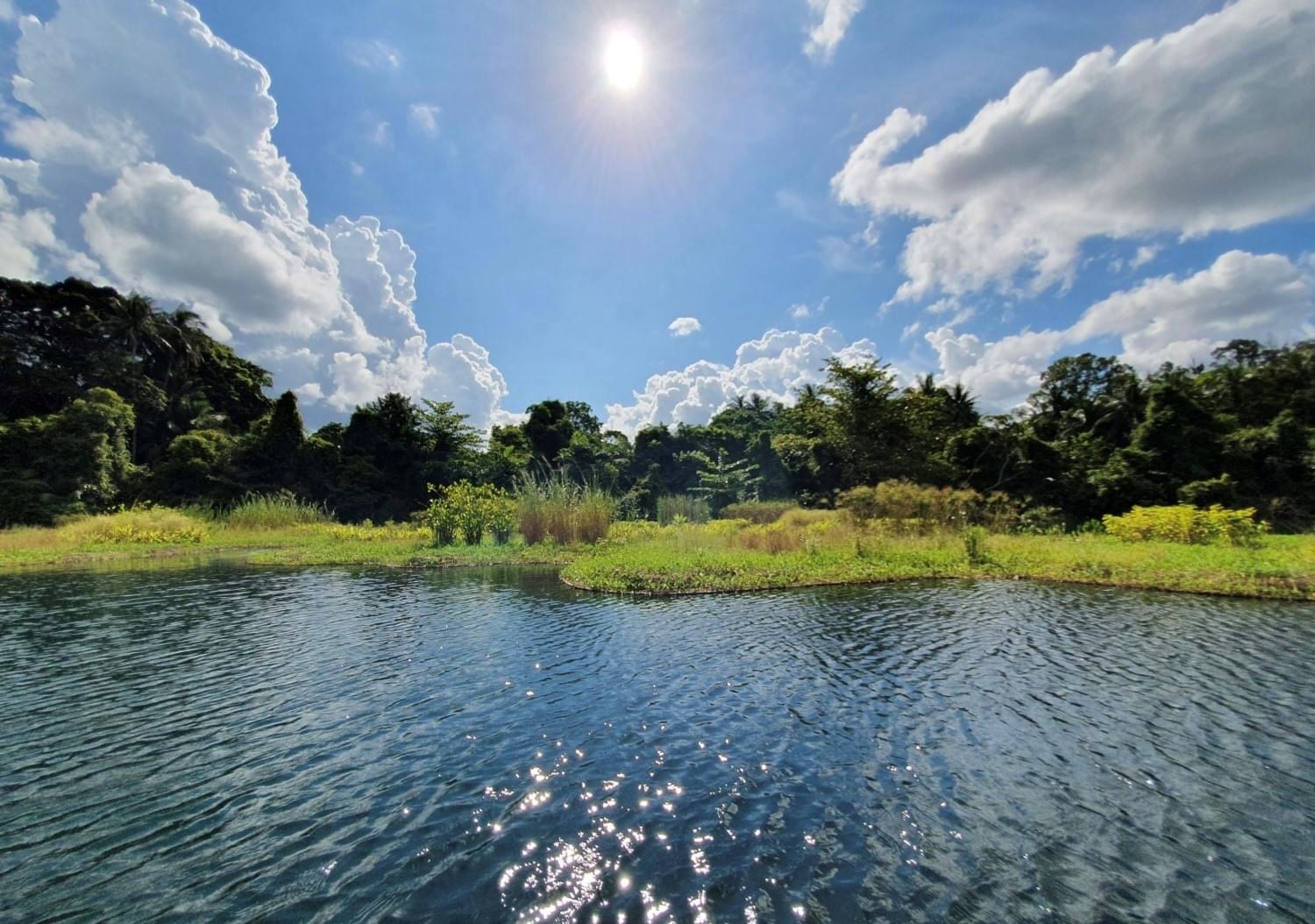
Over the years, Pekan Quarry has transformed from a bleak disused quarry, into a thriving freshwater wetland habitat, home to a variety of fauna and flora. As part of the habitat enhancement programme, floating wetlands were first introduced to Pekan Quarry in 2015 as a pilot initiative to increase the area of usable wildlife habitat. Since then, three more bigger floating wetlands have been installed, serving as nesting and roosting sites. These floating wetlands have been successful in increasing the area of usable wildlife habitat, from the edges of the quarry to the water surface itself. Herons, kingfishers, waterhens, otters, as well as dragonflies and damselflies have been observed to be using these floating wetlands.
Importance of Freshwater Wetlands
Wetlands provide many benefits to the ecosystem. Wetland plants filter sediments from the water and some can even remove heavy metals and other pollutions as well, helping to prevent the contamination of downstream water bodies.
Many animals and plants depend on the wetlands for survival. Plants provide ideal nesting places and food for birds and other small animals, while the fauna in turn help to disperse seeds.
Creation of the Floating Wetlands
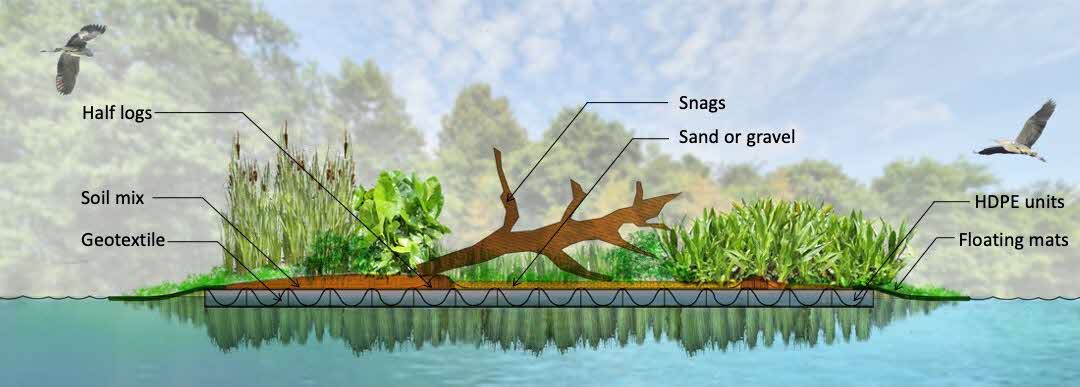
Cross-section view of the floating wetlands showing the various components used to create a suitable habitat for wildlife at Pekan Quarry
Four large clusters of floating wetlands have been deployed in Pekan Quarry. Together, they cover a combined area of 4,000 m2, the size of about eight basketball courts. The foundation of the wetlands consists of hexagon-shaped modules made with highly durable High-Density Polyethylene (HDPE) and developed by the Housing Development Board. Each module can bear a load of up to 80kg but is lightweight, scalable and can be pieced together to form large natural shapes of islands. The module has a hole in the middle, for the planting of freshwater wetland plants. A layer of soil is laid on the surface and floating mats attached to the module’s edges provide a stable surface for wildlife to climb on or forage from. Logs, snags and sandy areas are added to create more areas for animals to perch on and bask.
Heron Nesting Platforms
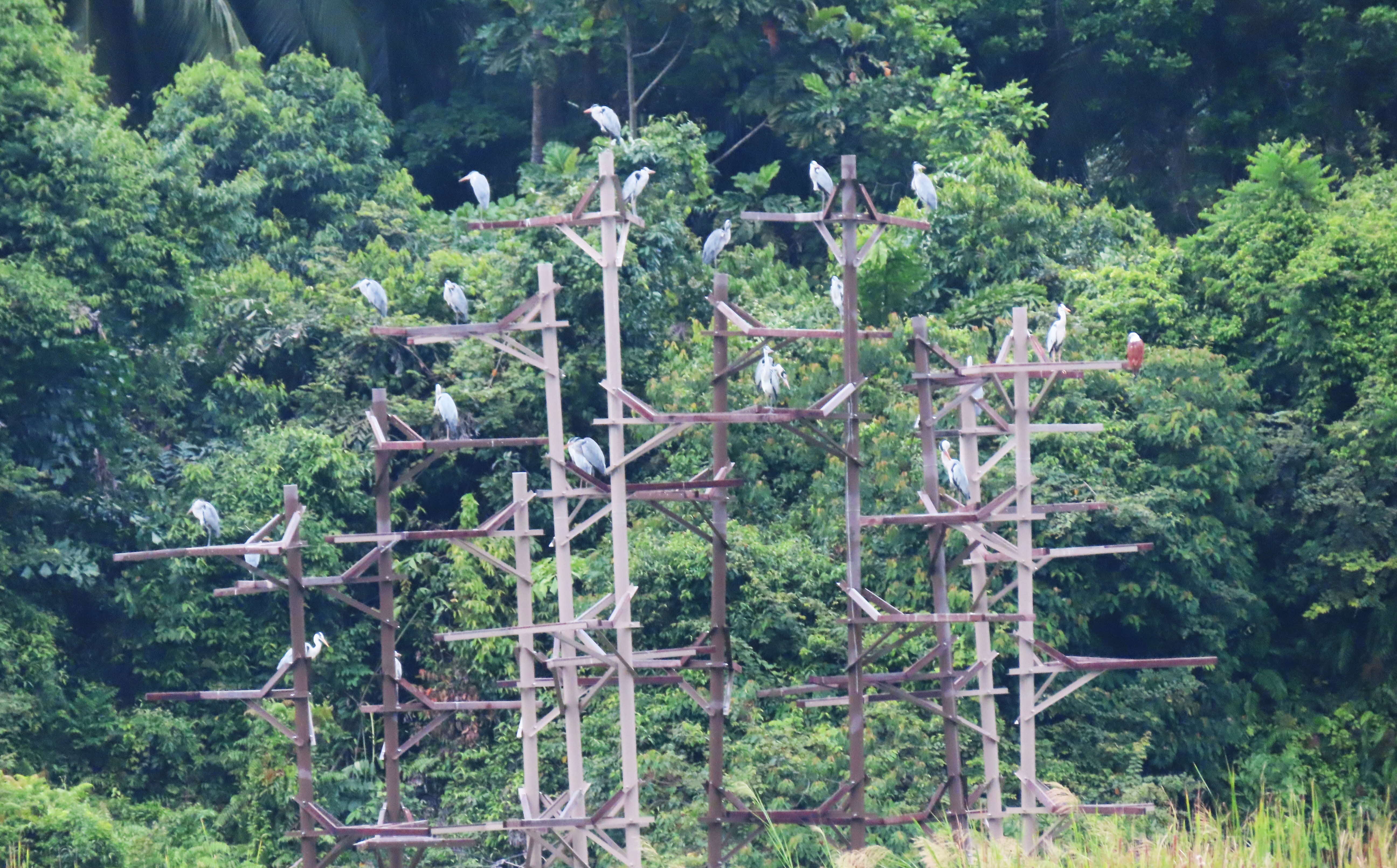
These platforms were installed to replicate the natural nesting sites of herons and cater to the various species that have different height preferences when looking for suitable places to build a nest. Some of the herons that are commonly sighted roosting on the platforms includes the Grey Heron (Ardea cinerea), Black-crowned Night Heron (Nycticorax nycticorax), Purple Heron (Ardea purpurea) and Great-billed Heron (Ardea sumatrana).